Timber vs Steel Frames | Bushfire Performance & Environmental Impact
Timber or Steel-
Which can withstand the heat?
Timber frames are a superior choice to steel frames in bushfire-prone areas due to their predictable fire performance and natural insulating properties. Unlike steel, which can rapidly lose strength and distort under extreme heat, structural timber chars at a controlled rate, forming a protective layer that helps maintain structural integrity for longer. This predictable behaviour allows timber framing to be engineered to meet Australian Bushfire Attack Level (BAL) requirements while delivering strong thermal performance, reduced heat transfer, and improved energy efficiency. For homeowners and builders seeking durable, bushfire-resilient construction, timber framing offers strength, safety, and long-term reliability.
1. Outperforms steel in bushfire conditions
Timber chars at a predictable rate when exposed to fire, forming a protective outer layer that can help slow the rate of structural loss. In comparison, steel can lose strength quickly under extreme heat and may deform once exposed to high temperatures. For bushfire-prone areas across NSW, properly designed timber framing can provide reliable structural performance when specified correctly for the site conditions.
2. Lower upfront construction costs
Timber framing is often more cost-effective to manufacture, transport and install than many steel framing systems. Because timber is widely used across Australian residential construction, builders and carpenters are familiar with the material, tools and installation process. This can help reduce labour costs, simplify site work and support a more efficient construction program.
3. Faster build times
Prefabricated timber wall frames and engineered roof trusses are manufactured off site and delivered ready for installation. This helps reduce the amount of cutting, measuring and framing work required on site. For builders, faster frame and truss installation can help keep projects moving, reduce delays and improve coordination with follow-on trades.
4. Reduced environmental impact
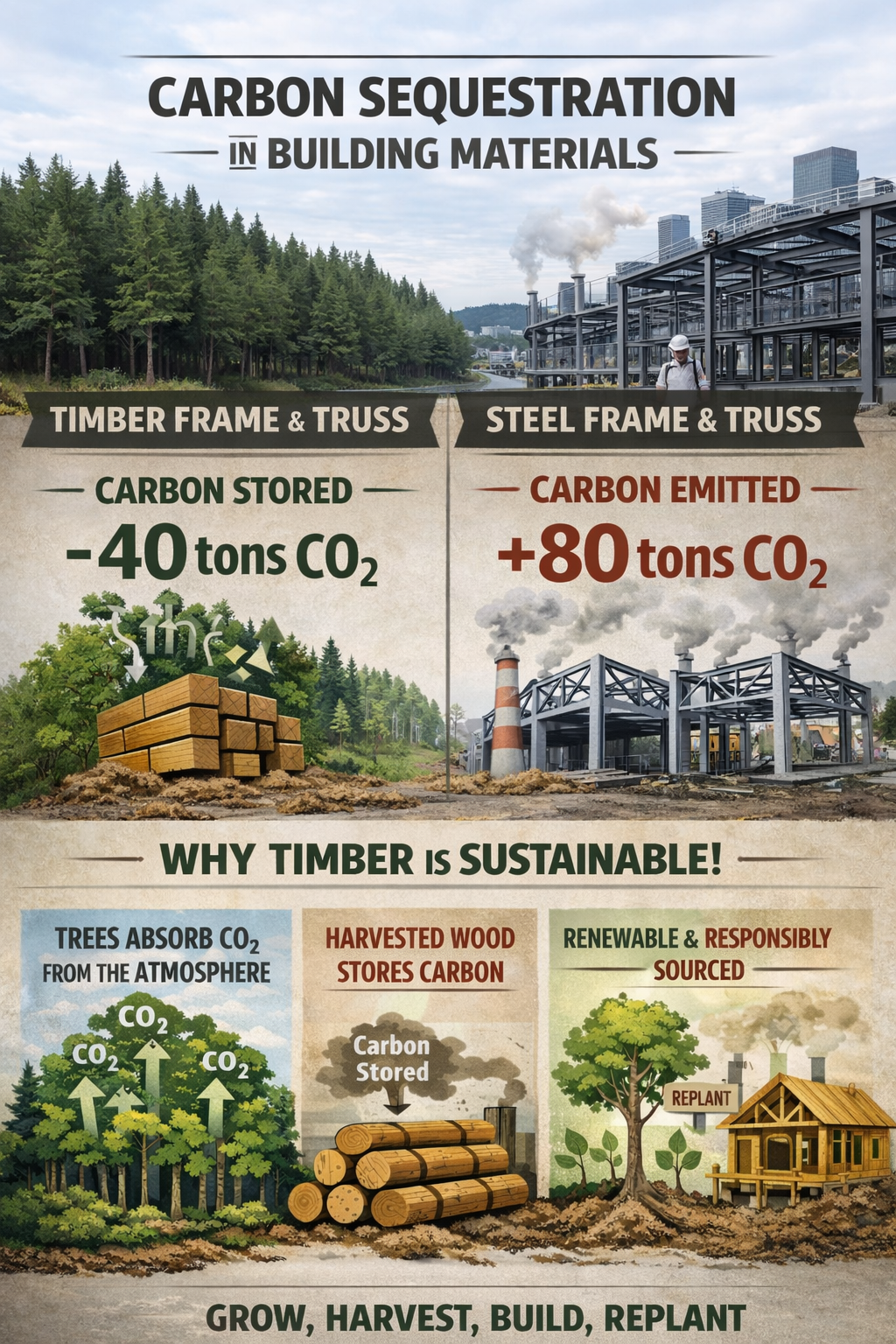
Timber is a renewable building material when sourced from responsibly managed forests and plantations. It also stores carbon throughout the life of the structure, making it a strong option for builders looking to reduce the environmental impact of residential construction. Compared with energy-intensive materials, timber framing can support a more sustainable building approach.
5. Better insulation and energy efficiency
Timber has natural insulating properties and conducts heat far less than steel. This helps reduce thermal bridging, where heat can transfer through the frame and affect indoor comfort. For residential homes, timber framing can support better thermal performance, improved energy efficiency and more comfortable living spaces when combined with the right insulation and building design.
6. Renewable and sustainable sourcing
Structural timber used in Australian framing is commonly sourced from plantation-grown timber and managed supply chains. This makes timber a renewable material choice for wall frames, roof trusses and flooring systems. For builders and homeowners looking for sustainable construction materials, timber offers a practical balance of strength, performance and responsible sourcing.
7. Strong structural performance
Engineered timber wall frames, roof trusses and flooring systems are designed to meet the structural requirements of each project. Timber framing provides excellent strength, flexibility and reliability for residential homes, duplexes, renovations and multi-dwelling construction. When designed, detailed and manufactured correctly, timber offers dependable structural performance across a wide range of NSW building projects.
8. Easier on-site modifications for builders
Prefabricated timber wall frames and roof trusses provide builders with greater flexibility on site, as timber can be cut, fixed and adjusted more easily than steel when minor framing changes are required.
9. Better suited to complex residential designs
Timber framing is highly adaptable for custom homes, renovations, duplexes, architectural roof lines and varied residential layouts. Engineered timber wall frames and roof trusses can be designed to suit different spans, pitches and structural requirements while still supporting efficient installation on site.
10. Proven in Australian residential construction
Timber framing is a trusted and widely used option for Australian homes, giving builders a familiar, practical and reliable framing system for new homes, renovations, duplexes and multi-dwelling projects.
Planning a Build in the Southern Highlands or Southern Tablelands?
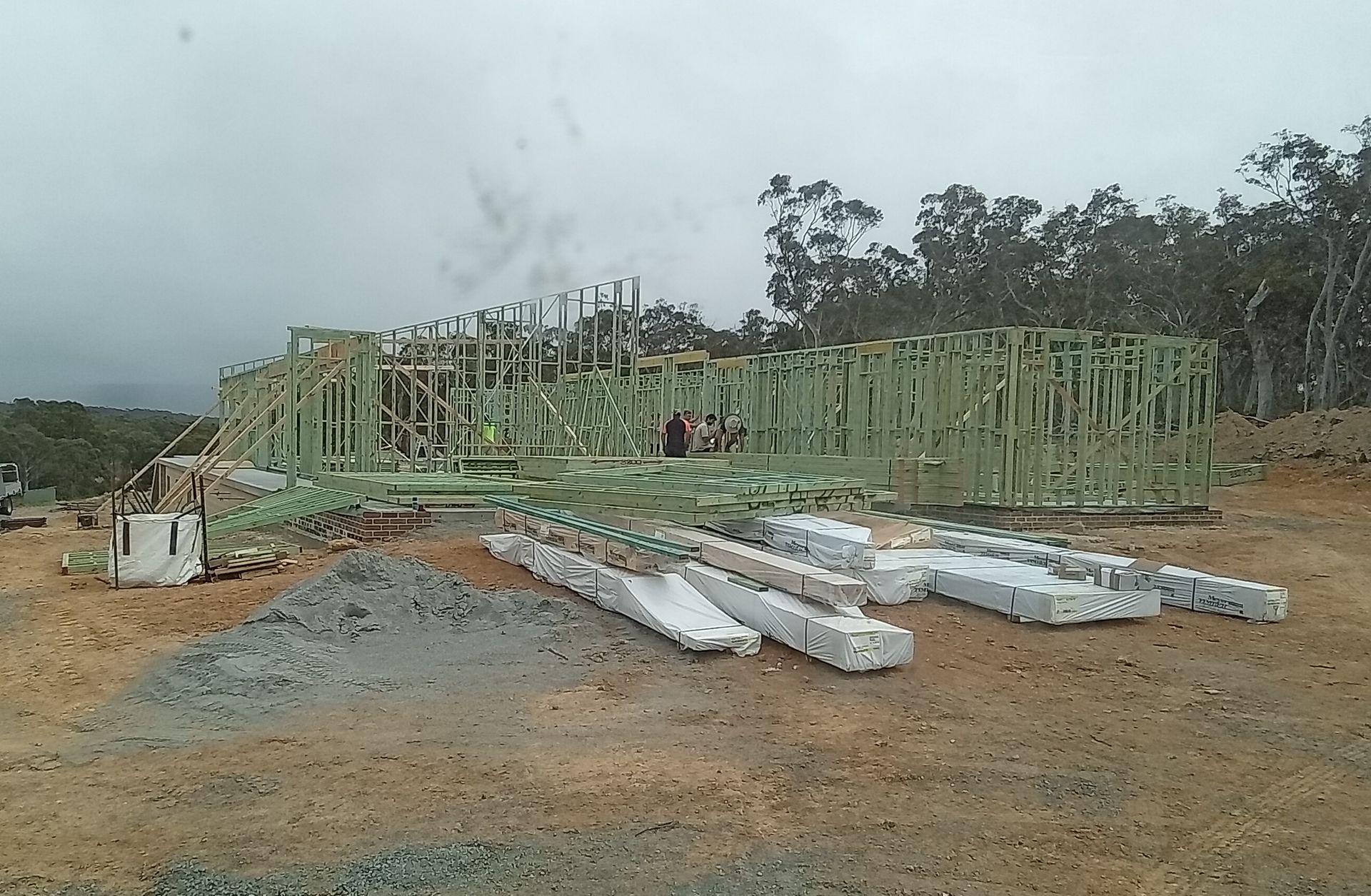
Not all framing materials perform the same in bushfire conditions. Our in-depth guide explains how timber and steel compare in terms of fire resistance, structural integrity and sustainability — specifically for Southern Highlands & Tablelands environments.
Click the image to explore the full article and understand which option suits your project.
Builder Resources for Timber Framing Design
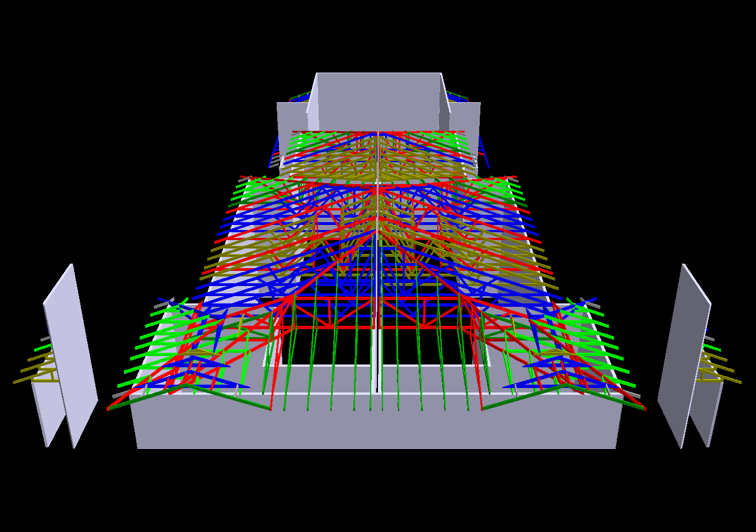
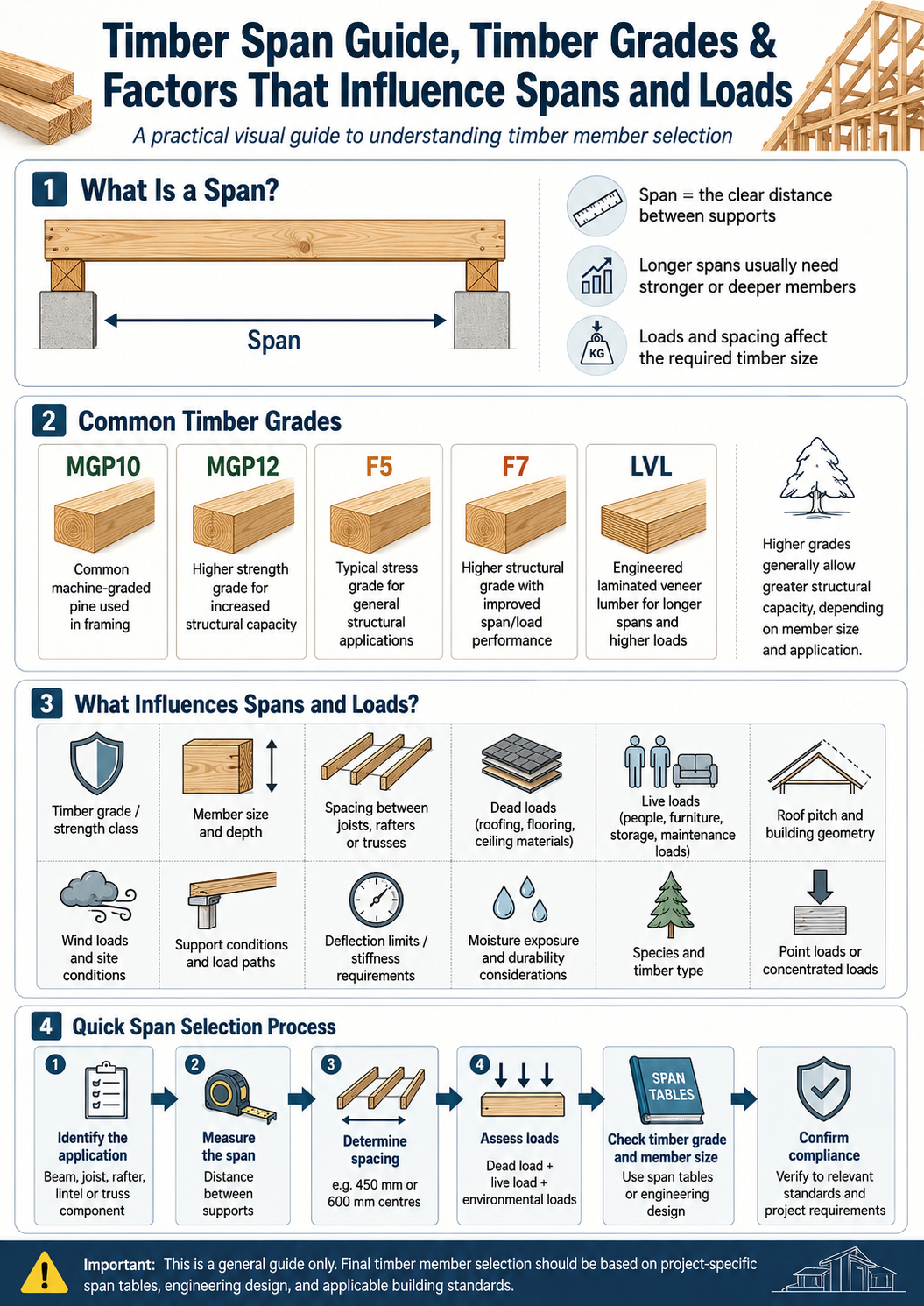
Understanding structural span capability, roof truss design and wall frame load paths is important when comparing timber and steel framing systems. Our builder resources provide practical guides explaining timber span design, roof truss engineering and structural framing systems used in residential construction.
➡ Explore our Builder Resources and Structural Design Guides by clicking here or the diagram
How Timber Construction Supports Lower-Carbon Building
As the construction industry looks for smarter, greener and more energy-efficient building solutions, timber frame construction continues to be a strong choice for modern residential projects.
Timber is renewable when responsibly sourced, stores carbon within the building structure, and can support more efficient building design when combined with good insulation, air sealing and thoughtful detailing.
For builders, designers and homeowners comparing timber vs steel frames, the environmental benefits of timber are an important part of the decision. A well-designed timber frame home can help reduce embodied impact, improve thermal performance and support long-term energy efficiency.
Trees Absorb Carbon Naturally
As trees grow, they absorb carbon dioxide from the atmosphere. When timber is harvested and used in construction, much of that carbon remains stored within the timber for the life of the building.
This means timber wall frames, roof trusses and flooring systems can form part of a lower-carbon building approach.
Timber Stores Carbon in the Building Structure
Unlike some highly processed building materials, timber can act as a carbon-storing structural material. When used in wall frames, roof trusses and floor systems, timber becomes part of the building’s long-term structure rather than a short-life product.
This makes timber framing a practical option for builders looking for sustainable construction materials without compromising strength, reliability or installation efficiency.
Reduced Thermal Bridging
Timber naturally conducts less heat than steel, which can help reduce thermal bridging through the frame.
Thermal bridging occurs when heat transfers through structural elements, making it harder to maintain comfortable indoor temperatures.
When timber framing is combined with the right insulation, building wrap, glazing and envelope design, it can support better energy performance and improved indoor comfort.
Airtight Building Envelopes and Energy Efficiency
Energy-efficient homes rely on more than just the frame material. A strong result comes from combining good design, quality insulation, careful detailing and an airtight building envelope.
Prefabricated timber wall frames and engineered roof trusses help builders work with accurate, consistent framing components. This can support better installation, reduced gaps and improved coordination with insulation, wrap and internal linings.
Lower Heating and Cooling Demand
By reducing thermal bridging and supporting a better insulated building envelope, timber frame construction can help reduce the demand on heating and cooling systems.
This can contribute to lower running costs and improved comfort over the life of the home.
For builders across Sydney, the Illawarra, the South Coast and the Southern Highlands, timber framing remains a practical, familiar and sustainable choice for residential and multi-dwelling construction.
Key Environmental Benefits of Timber Framing
- Trees absorb carbon naturally as they grow.
- Timber stores carbon within the building structure.
- Timber is renewable when responsibly sourced.
- Timber framing can help reduce thermal bridging.
- Prefabricated timber frames support accurate installation.
- Better building envelopes can help reduce heating and cooling demand.
- Timber is widely used and proven in Australian residential construction.
When comparing timber vs steel frames, it is important to consider both embodied energy and operational energy. Timber framing can offer a strong balance of structural performance, sustainability, thermal comfort and construction efficiency.
Interesting information: https://www.yourhome.gov.au/materials/embodied-energy