
Timber Span And Structural Design Guide for Residential Framing
Understanding Span Design in Timber Framing
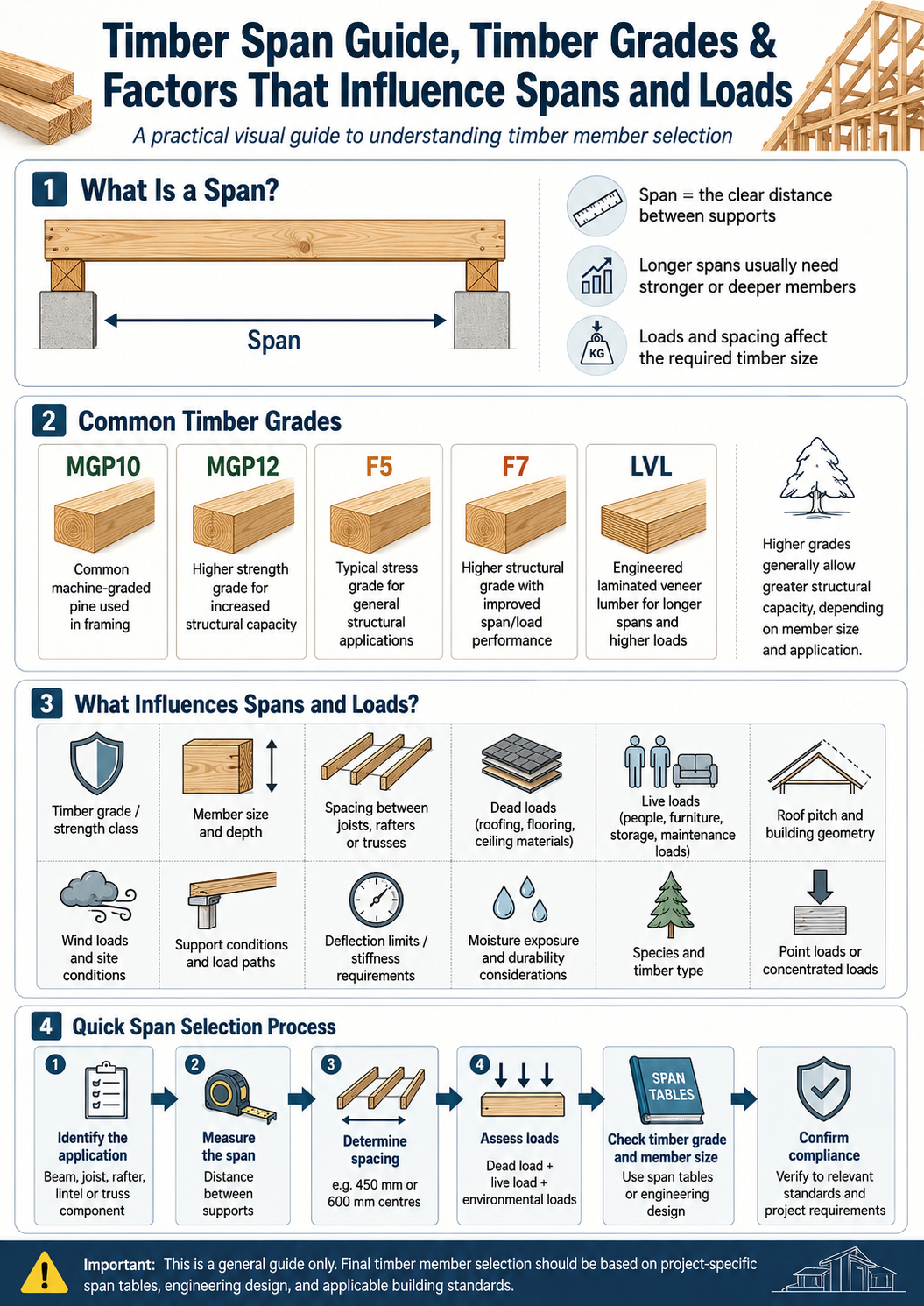
Span design is a critical factor in residential construction. Structural framing members must safely transfer loads from the roof, floors and walls to the building foundation while maintaining stability and compliance with Australian building standards.
Timber framing systems used in residential construction are engineered based on a combination of factors including material strength, structural loads, wind classification and building geometry. Span capability influences the layout of wall frames, roof trusses and floor systems and plays an important role in determining structural efficiency and design flexibility.
When correctly engineered, timber framing systems allow longer spans, reduced internal load-bearing walls and greater flexibility for modern open-plan residential layouts.
Roof Truss Span Design
Roof trusses are engineered structural systems designed to distribute roof loads efficiently across the building structure. Unlike traditional stick framing, prefabricated roof trusses allow larger spans while maintaining structural integrity.
Span capability for roof trusses depends on several factors including roof pitch, truss configuration, timber grade and wind classification. Truss systems are designed using specialised structural software to ensure compliance with engineering requirements and Australian building standards.
Engineered roof trusses can support a wide range of residential roof designs including:
- standard gable roofs
- hip roof configurations
- cathedral ceilings
- open-plan roof spans
➡ Learn more about Timber Roof Trusses
Wall Frame Structural Load Paths
Timber wall frames form the vertical structural support system of a residential building. They transfer loads from the roof and upper floors down to the foundation while providing lateral stability through bracing systems.
Correct wall frame design ensures that structural loads follow continuous load paths throughout the building. Span considerations influence stud spacing, lintel sizing and bracing placement.
Timber wall frames used in residential construction must comply with AS1684 – Residential Timber Framed Construction standards, which outlines requirements for framing member sizing, bracing systems and connection detailing.
➡ Explore Timber Wall Frames
Timber Flooring Span Systems
Floor systems in residential buildings must support structural loads while providing a stable and level platform for upper floors. Modern engineered timber flooring systems allow greater span capability compared with traditional solid timber joists.
Common flooring system components include:
- LVL beams
- engineered I-joists
- bearers and joists
- structural floor sheeting
Engineered floor systems allow longer spans while reducing structural weight and improving installation efficiency. These systems are commonly used in residential construction where open-plan layouts and larger room spans are required.
➡ View Timber Flooring Systems
Wind Classification & Structural Engineering
Wind classification plays an important role in structural span design across many regions of New South Wales. Residential buildings are typically designed according to wind classifications defined in AS4055 – Wind Loads for Housing.
Wind exposure, terrain category and site elevation influence structural load calculations and framing requirements. Roof trusses, wall frames and floor systems must be engineered to accommodate these loads while maintaining compliance with the National Construction Code (NCC).
Early coordination between the builder, engineer and framing manufacturer ensures structural systems align with approved drawings and site-specific engineering requirements.
➡ Learn more about Wind and Environmental standards
Engineering, Detailing & Compliance
Accurate structural detailing is essential for ensuring that framing systems are manufactured and installed correctly. Engineering documentation typically includes:
- structural load calculations
- framing layout drawings
- bracing details
- connection specifications
Specialised detailing software is used to model framing systems and verify structural performance before manufacturing begins. This process improves accuracy, reduces site modifications and ensures compliance with Australian standards.
➡ Learn more about Estimates & Detailing
Timber Framing for Residential Construction Across NSW
Environmental conditions across New South Wales can influence framing design requirements. Wind exposure, bushfire zones and terrain conditions vary between regions, requiring structural systems to be engineered accordingly.
Prefabricated timber frames, roof trusses and flooring systems are commonly used in residential construction projects across:
These engineered systems improve installation efficiency while maintaining structural reliability across a wide range of residential building environments.
➡ Explore our Service Areas
Find out about Standard Stud Spacing Under AS1684 here!
Frequently Asked Questions About Timber Span Design
What determines the maximum span of timber framing members?
The maximum span of timber framing members depends on several structural factors including timber grade, member size, load requirements, wind classification and the overall structural design of the building. Span capability must be calculated according to Australian building standards and verified through structural engineering to ensure safe load transfer throughout the structure.
Do timber roof trusses allow longer spans than traditional framing?
Yes. Engineered timber roof trusses are designed to distribute loads efficiently across the structure, allowing larger spans than traditional stick framing methods. Prefabricated trusses can eliminate the need for internal load-bearing walls in many residential designs, supporting open-plan layouts and more flexible architectural designs.
Are timber span tables the same for every building project?
No. Span tables provide general guidance, but actual structural spans vary depending on site conditions, wind classification, terrain category and engineering requirements. Structural engineers and truss designers use specialised design software and engineering calculations to determine the appropriate framing system for each project.