N2 vs N3 Wind Classification NSW | Roof Truss Guide
Roof Truss Wind Classifications in NSW (N2 vs N3 Explained)
Wind classification is one of the most important factors when designing and manufacturing roof trusses for residential construction in New South Wales. The assigned wind rating determines how structural components such as roof trusses, wall frames, bracing systems and tie-downs must be engineered to safely resist wind loads.
In most NSW residential projects, the wind classifications builders encounter are N2 or N3, which are defined under AS 4055 – Wind Loads for Housing. These classifications represent different wind pressures acting on a building and directly influence the structural design of roof trusses and framing systems.
Understanding the difference between N2 and N3 helps builders ensure compliance while selecting the correct structural system for their site conditions.
What Is a Wind Classification?
A wind classification represents the design wind pressure that a building must withstand. The rating is calculated based on several site conditions including:
- Geographic wind region
- Terrain category (open land, suburban, coastal etc.)
- Shielding from nearby buildings or trees
- Topography such as hills or escarpments
These factors are assessed under AS4055 to determine the appropriate wind classification for the building site.
The result determines structural requirements for the entire building system, including roof trusses, wall frames, cladding fixings and tie-down connections.
Common Residential Wind Classifications in NSW
In most non-cyclonic parts of Australia, residential buildings fall within N-rated wind classifications.
Typical classifications include:
- N1 – sheltered suburban sites
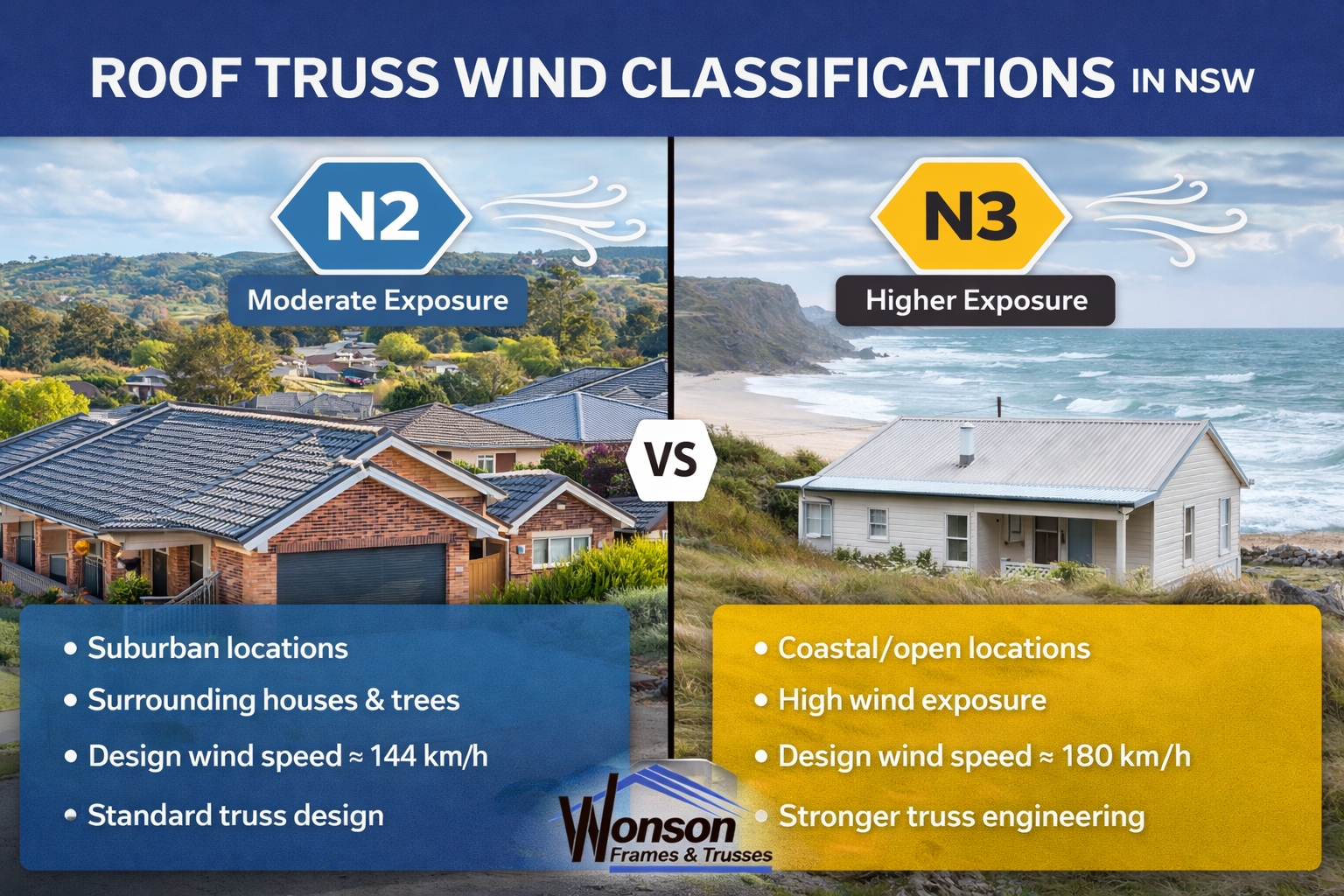
- N2 – standard suburban exposure
- N3 – higher exposure areas
- N4–N6 – extreme wind zones
Most housing projects in NSW fall within N2 or N3 categories depending on the exposure of the building site.
N2 Wind Classification Explained
N2 is the most common wind rating used in standard suburban residential construction.
It typically applies to areas where buildings are surrounded by other homes, fences and trees that provide natural shielding from strong winds.
N2 classification corresponds to design wind speeds of roughly 33 m/s (around 144 km/h).
Typical N2 locations include:
- Established suburban estates
- Built-up residential areas
- Sites with surrounding structures acting as wind breaks
For roof trusses, N2 designs usually involve:
- Standard truss spacing
- Typical tie-down requirements
- Standard bracing layouts
While N2 is considered a moderate wind classification, structures must still comply fully with Australian standards.
N3 Wind Classification Explained
N3 represents a higher wind exposure than N2 and requires stronger structural design.
This classification generally applies to locations with greater exposure to wind such as:
- Coastal suburbs
- Rural or open land
- Elevated terrain
- Areas near escarpments or large open spaces
N3 corresponds to design wind speeds of approximately 41 m/s (around 180 km/h).
Because wind pressure increases significantly between N2 and N3, structural elements must be strengthened.
Roof trusses in N3 areas may require:
- Increased tie-down capacity
- Additional bracing
- Stronger connections between structural elements
- Modified spacing or member sizes
These changes help the building resist higher uplift and lateral wind forces.
How Wind Classification Affects Roof Truss Design
Wind classification directly impacts the engineering of roof trusses and the overall framing system.
Higher wind loads increase the forces acting on the roof structure, particularly uplift forces, which attempt to lift the roof off the building during strong wind events.
To counter this, the structure must include a continuous load path from the roof through the wall frame and down to the foundation.
For example:
- Roof trusses must be securely tied to the wall frame
- Wall frames must be connected to the slab or subfloor
- Bracing systems must resist lateral movement
In higher wind classifications, additional tie-down connections may be required to transfer uplift forces safely through the structure.
Why Correct Wind Classification Matters
Using the correct wind classification is critical for both safety and compliance.
Incorrect wind ratings can result in:
- Structural failure during severe weather
- Non-compliance with Australian building standards
- Increased risk of roof uplift
- Insurance or certification issues
Because wind exposure can vary even within the same suburb, wind classification should always be confirmed through engineering documentation or site assessment.
Roof Truss Design for NSW Conditions
In NSW residential construction, roof trusses are engineered to match site-specific wind classifications and structural requirements.
Precision-manufactured roof trusses allow builders to achieve:
- Accurate load transfer
- Compliance with AS4055 and NCC requirements
- Efficient installation on site
- Consistent structural performance
By aligning truss design with the correct wind classification, builders can ensure their structures perform reliably under local weather conditions.
For more specific information to your region have a look at our Service-Areas specific pages
Frequently Asked Questions – Wind Classifications
What wind classification is most common in NSW?
Most residential homes in NSW are classified as N2 or N3 depending on site exposure and surrounding terrain.
What determines whether a house is N2 or N3?
The wind classification is determined by factors such as location, terrain category, shielding from nearby buildings and the topography of the site.
Are coastal homes usually N3?
Yes. Coastal areas or sites with open exposure are more likely to receive an N3 wind classification due to stronger wind pressures.
Does wind classification affect roof trusses?
Yes. Roof truss design, tie-down systems, bracing and structural connections are all influenced by the assigned wind classification.