Illawarra Construction & Framing Climate Considerations
Timber Frames & Roof Trusses in The Illawarra Climate
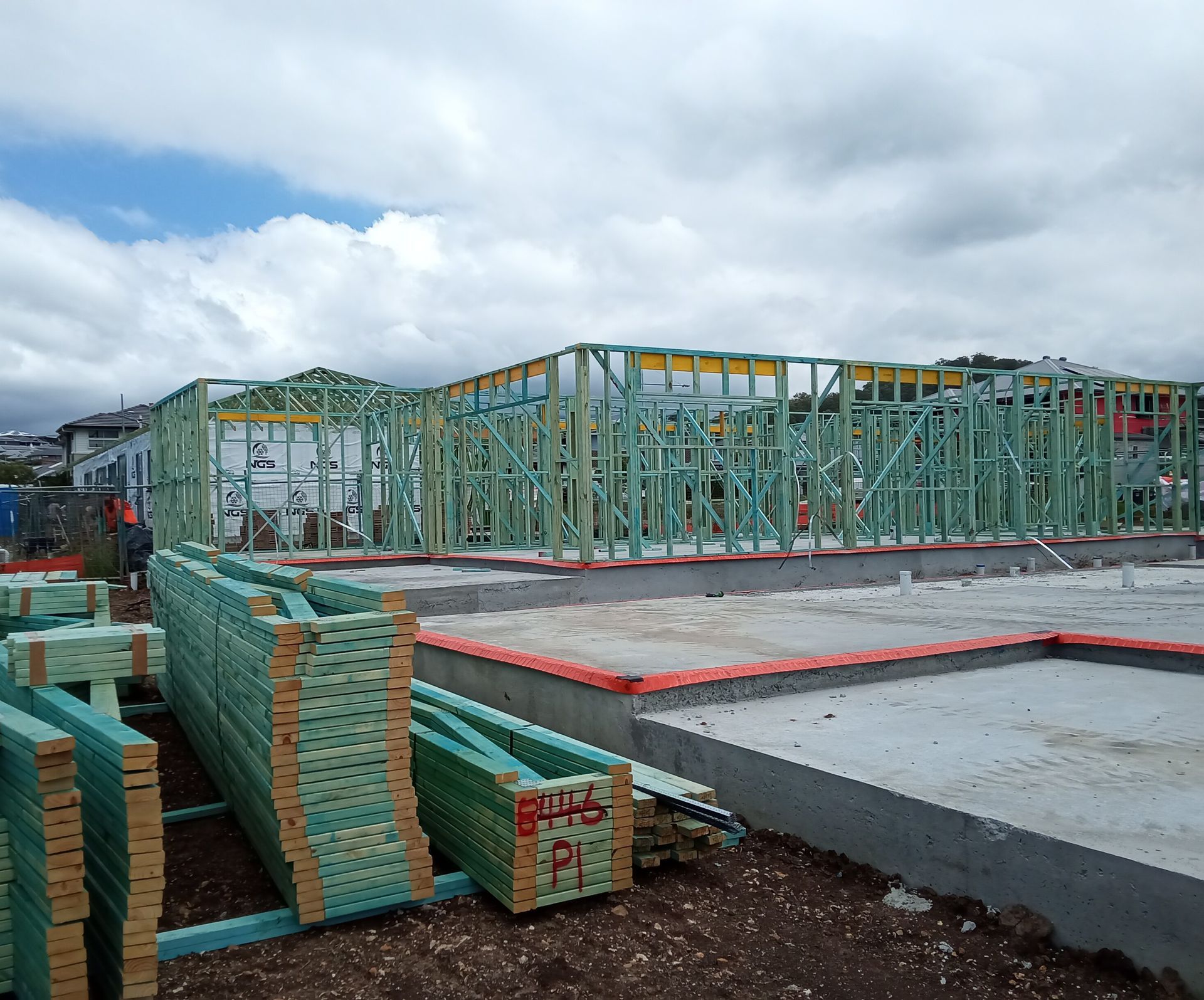
Construction across the Illawarra presents unique structural demands. Positioned between the coastline and the escarpment, the region experiences a combination of heavy rainfall, wind exposure, salt-laden air and steep terrain.
For builders operating in Wollongong, Shellharbour and surrounding suburbs, framing systems must account for moisture management, wind loading and long-term durability.
Timber framing in the Illawarra isn’t just about compliance — it’s about performance in a dynamic environment.
Escarpment Wind & Terrain Considerations
The Illawarra escarpment influences local wind patterns and exposure classifications.
Sites positioned:
- On elevated terrain
- Near cliff edges
- In open coastal corridors
may experience increased wind pressure and uplift forces.
Roof trusses and wall frames must align with:
- AS 4055 wind classifications
- Project-specific engineering
- Terrain category adjustments
Proper bracing and tie-down detailing ensures structural stability across varying exposure conditions.
Rainfall & Moisture Management
The Illawarra region experiences consistent rainfall throughout the year, increasing the importance of:
- Accurate prefabrication
- Reduced on-site exposure time
- Proper installation sequencing
- Moisture-aware detailing
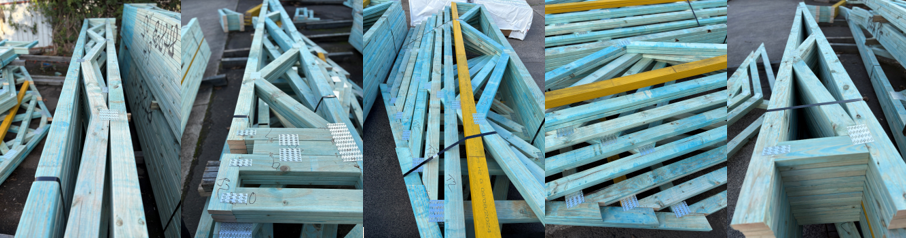
Precision-manufactured timber frames and roof trusses reduce the time structural elements remain exposed to weather, helping builders protect material integrity and maintain program efficiency.
Moisture management is not optional in this region — it’s essential.
Coastal & Suburban Interface Construction
Unlike purely coastal areas, Illawarra builds often sit within a mixed environment:
- Suburban residential
- Coastal proximity
- Escarpment slopes
- Infill development
This requires framing systems that accommodate:
- Sloping site designs
- Split-level homes
- Custom architectural builds
- Energy-efficient construction standards
Structural accuracy ensures load distribution remains consistent across complex layouts.
Energy Efficiency & Thermal Performance
Energy performance is increasingly important for Illawarra residential construction.
Engineered timber framing supports:
✔ Tight construction tolerances
✔ Reduced thermal bridging
✔ Accurate insulation integration
✔ Compatibility with energy-efficient roof systems
With rising focus on sustainability and long-term operational efficiency, precision framing contributes directly to overall building performance.
Compliance & Local Building Standards
Illawarra construction must comply with:
- NCC (National Construction Code)
- Local council development approvals
- Structural engineering specifications
- Wind classification requirements
Early coordination between builder, engineer and framing manufacturer ensures:
- Load alignment
- Accurate layout drawings
- Installation clarity
- Reduced on-site adjustments
Proper planning prevents costly delays.
Supporting Builders Across Illawarra
We manufacture and supply engineered timber frames and roof trusses tailored for Illawarra residential and multi-dwelling projects.
Our approach aligns:
- Structural engineering
- Wind exposure considerations
- Moisture management
- Efficient manufacturing
- Coordinated delivery scheduling
If you're pricing or planning a build across the Illawarra region, early structural coordination ensures your project remains compliant, durable and program-ready.
📞 Contact our team to discuss your next Illawarra project.
Frequently Asked Questions – Illawarra Timber Frames & Roof Trusses
What wind classification applies to Illawarra builds?
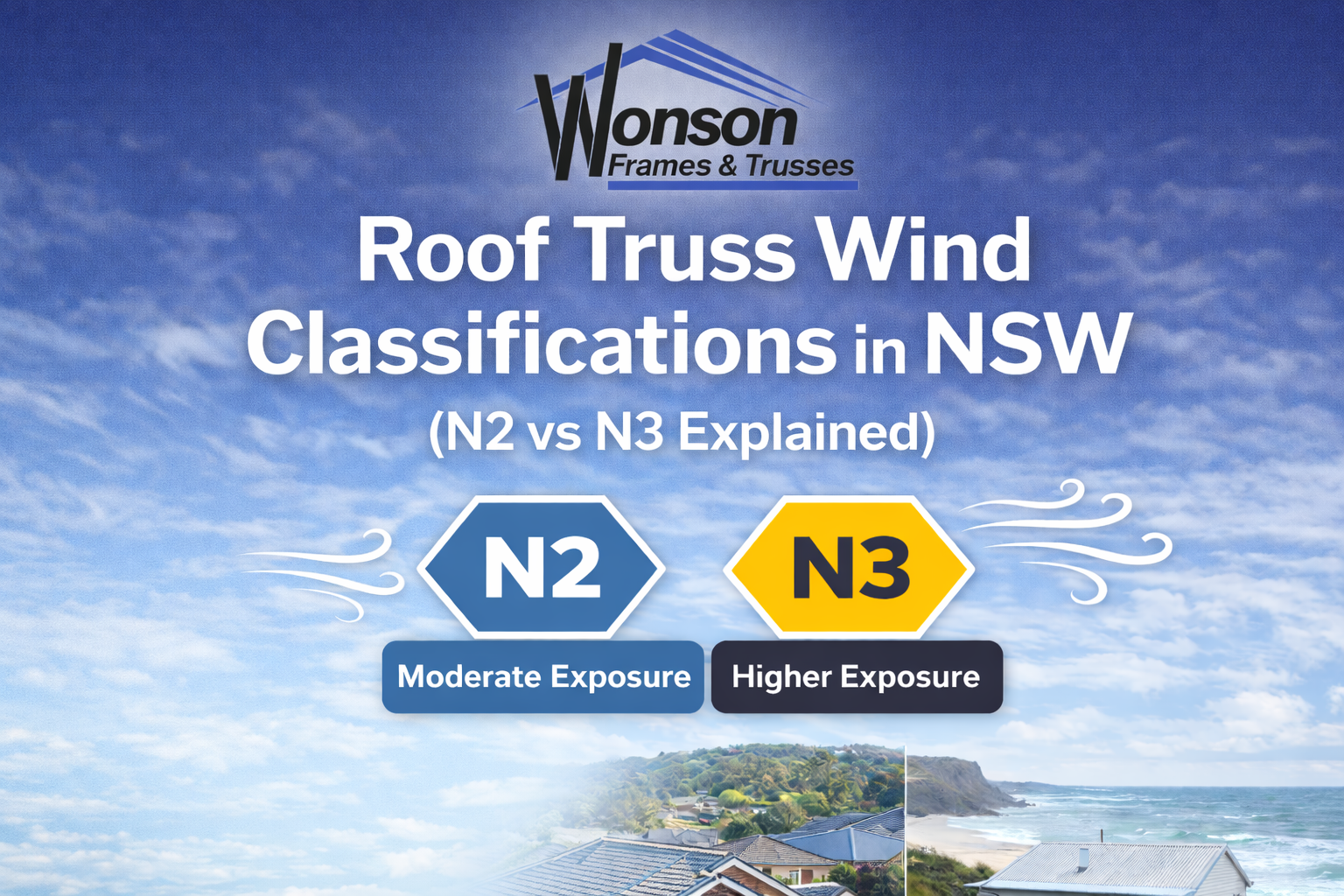
Wind classification in the Illawarra varies depending on terrain, elevation and proximity to the escarpment or coastline. Many residential builds fall within N2 or N3 classifications under AS 4055, though elevated or exposed sites may require site-specific engineering. Structural drawings determine final wind load requirements.
Do escarpment sites require different framing design?
Yes. Properties positioned near the escarpment or on sloping terrain may experience increased wind pressure and uplift forces. Framing systems must account for terrain category, elevation and exposure. Proper bracing and tie-down detailing is essential for structural stability.
How does heavy rainfall affect framing in the Illawarra?
The Illawarra experiences consistent rainfall throughout the year. Efficient prefabrication reduces on-site exposure time, helping protect timber elements during construction. Proper installation sequencing and moisture management practices are critical for long-term durability.
Are timber frames suitable for coastal Illawarra suburbs?
Yes. Engineered timber framing performs reliably in Illawarra coastal suburbs when appropriate fixings and detailing are used. Exposure classification determines the level of corrosion protection required for connectors and tie-down components.
What documentation is provided with roof trusses?
Engineered roof truss supply typically includes:
- Layout drawings
- Load calculations
- Engineering certification
- Installation guidelines
Documentation must align with approved structural drawings and NCC compliance requirements.
Do Illawarra projects require special consideration for energy efficiency?
Increasingly, yes. Tight construction tolerances and accurate prefabrication support insulation performance and reduced thermal bridging. Well-engineered framing systems contribute to improved overall energy efficiency in residential builds.
📞 Contact our team to discuss your next Illawarra project. Working on a build near the escarpment or coastline? Explore our Illawarra framing services page to learn how we design for wind exposure and heavy rainfall conditions.