Sustainable Timber Frames & Roof Trusses NSW | Low-Carbon Building Guide
How Timber Frames and Trusses Help Fight Climate Change
As the construction industry looks for smarter, greener building methods, timber frame construction continues to stand out as one of the most sustainable structural choices for Australian homes and multi-dwelling projects.
Timber is strong, versatile, renewable, and when responsibly sourced, it can help reduce the environmental impact of construction. Unlike many conventional building materials, timber naturally stores carbon that was absorbed by trees while they were growing. When that timber is used in wall frames, roof trusses, and flooring systems, the carbon can remain locked away in the building for decades — often for the life of the structure. Timber products in use across Australia act as a carbon store.
For builders, developers, and homeowners looking for low-carbon construction solutions, timber frames and trusses offer a practical way to support more sustainable building without compromising strength, accuracy, or performance.
Trees Absorb Carbon Naturally
Trees absorb carbon dioxide from the atmosphere as they grow. Through photosynthesis, carbon is stored within the tree’s fibres, while oxygen is released back into the air.
When trees are harvested from responsibly managed forests and converted into building products, much of that stored carbon remains inside the timber. New trees can then be planted or regenerated, continuing the cycle of carbon absorption and renewable material production. Australia’s forestry sector identifies forests and wood products as important carbon stores.
This makes timber different from many other structural materials because it starts its life by removing carbon from the atmosphere.
Wood Stores Carbon for Decades
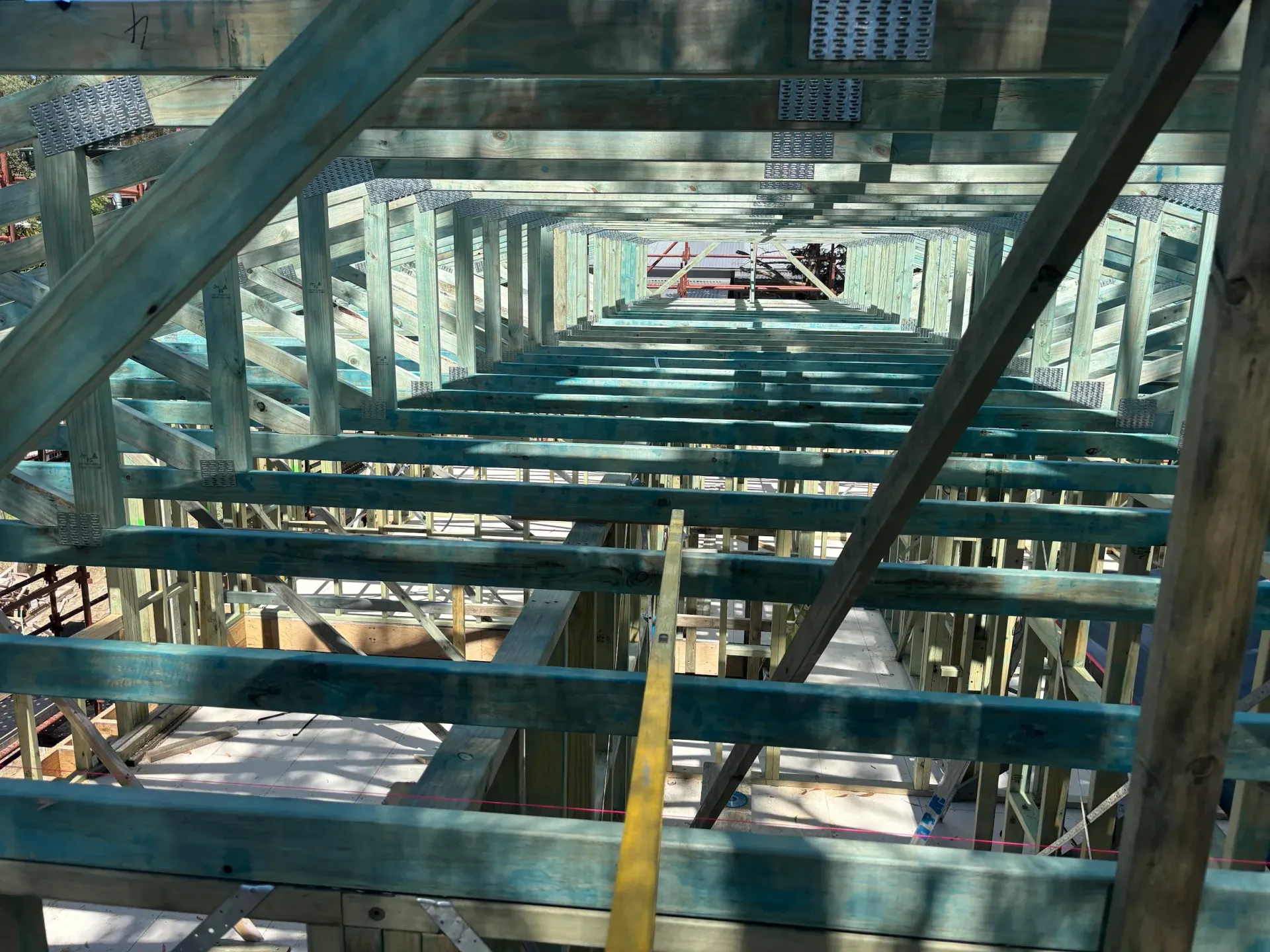
When timber is manufactured into timber wall frames, roof trusses, and structural flooring systems, the carbon remains stored in the wood.
Instead of releasing that carbon back into the atmosphere immediately, the timber becomes part of the building structure. In a well-designed and properly maintained home or development, timber can continue storing carbon for many decades.
This is one reason timber construction is often discussed as part of the solution for reducing the carbon footprint of the built environment.
Buildings Become Carbon Storage Units
Every timber-framed home or multi-dwelling project has the potential to become a long-term carbon storage unit.
The more timber used in structural framing, roof trusses, floor systems, and engineered timber components, the more carbon can remain locked into the building fabric. For builders seeking more sustainable construction methods, this makes timber a valuable choice for reducing embodied carbon.
Embodied carbon refers to the emissions connected to the production, transport, and installation of building materials. Smart designs using wood products in structural systems can help reduce fossil fuel use and greenhouse gas emissions across the building life cycle.
How Timber Framing Supports BASIX and Sustainable Building
Timber framing plays an important role in sustainable residential construction across NSW, especially as builders and homeowners focus more on energy efficiency, thermal performance and lower-carbon building materials. When designed correctly, prefabricated timber wall frames and roof trusses can help support BASIX requirements while also improving long-term comfort and build efficiency.
Timber Framing and Thermal Performance
Timber naturally performs better than steel when it comes to thermal bridging. Steel conducts heat and cold more easily, while timber acts as a natural insulator. This can help reduce unwanted heat transfer through the building frame and support a more energy-efficient home.
However, framing layout still matters. If a wall frame is too heavily loaded with closely spaced studs, noggings or structural members, it can reduce the amount of insulation that fits within the wall cavity. A well-designed timber frame balances structural strength with space for insulation, helping the wall system perform as intended.
Wall Cavity Sizing and Insulation
To meet BASIX thermal comfort requirements, many NSW homes require higher levels of wall insulation, such as R2.0 or R2.5 batts. The timber frame must be designed with the right stud size and wall cavity depth to suit the required insulation.
For example, 90mm and 140mm timber studs may be specified depending on the project design, insulation requirements and energy rating outcomes. If insulation is compressed into a cavity that is too small, it can lose effectiveness. Correct frame sizing helps ensure the insulation performs properly and contributes to better heating and cooling efficiency.
Airtightness, Moisture Control and Vapour Management
Modern BASIX-compliant homes are often designed with higher insulation levels, improved airtightness and more efficient building envelopes. This makes correct wall framing, wrap, sealing and moisture management even more important.
A properly detailed timber frame helps create a stable structure for wall wraps, insulation, cladding and internal linings. This supports weather resistance and helps reduce the risk of moisture build-up within the wall system. When timber framing is manufactured accurately and installed correctly, it contributes to a more durable and energy-efficient home.
Common Timber Framing Materials Used in NSW
MGP10 and MGP12 Pine
MGP10 and MGP12 machine-graded pine are commonly used throughout NSW for timber wall frames, roof trusses and general residential framing. These grades provide reliable strength, consistency and structural performance for a wide range of housing and multi-dwelling projects.
Termite-Treated Pine
In termite-prone areas across the Illawarra, South Coast and wider NSW regions, termite-treated timber is often specified to improve long-term durability. H2-treated pine is commonly used for protected internal framing, while H3-treated timber may be used for above-ground applications where greater exposure resistance is required.
Using the correct treated timber helps protect the structure and supports the long-term performance of the home.
Engineered Timber Products
Engineered timber products, such as Laminated Veneer Lumber, are often used where extra strength, longer spans or improved dimensional stability are required. LVL may be used for lintels, beams, floor joists and structural supports, especially in homes with large window openings, open-plan layouts or more complex BASIX-driven design requirements.
By combining prefabricated timber framing, engineered timber products and accurate detailing, NSW builders can achieve strong, efficient and sustainable structural systems that support both construction performance and energy efficiency.
Timber Frames Can Help Improve Thermal Performance
Sustainable construction is not only about the materials used. It is also about how a building performs over time.
A well-designed timber frame can support strong thermal performance when combined with good insulation, careful detailing, and an airtight building envelope. This can help reduce the amount of energy needed for heating and cooling.
Thermal bridging is an important issue in building design. Thermal bridges allow heat to transfer through parts of the walls, floors, or roof, which can affect comfort, energy efficiency, and condensation risk. Thermal bridges should be identified and insulated to reduce heat flow and condensation risk.
Timber framing generally has lower thermal conductivity than steel, making it a strong option for energy-conscious residential construction when properly designed and installed.
Reduced Thermal Bridging
Thermal bridging occurs when heat moves through structural elements more easily than through the surrounding insulated areas.
In Australian homes, this can contribute to heat loss in winter and heat gain in summer. Timber framing can help reduce this risk compared with materials that conduct heat more readily.
For builders working across Sydney, the Illawarra, the South Coast, and the Southern Highlands, this can be especially important where climate, wind exposure, bushfire requirements, and energy efficiency expectations all need to be considered during design.
Airtight Building Envelopes Support Energy Efficiency
An airtight building envelope helps control unwanted air leakage. When timber frames and trusses are accurately manufactured and installed, they help create a more consistent structure for insulation, linings, and building wrap systems.
Better airtightness can help improve comfort and reduce heating and cooling demand. This supports lower operational energy use over the life of the home.
For builders, the key is accurate framing, careful detailing, and coordination between design, estimating, manufacturing, and installation.
Lower Heating and Cooling Costs
A home that is well insulated, carefully detailed, and built with reduced thermal bridging can place less demand on heating and cooling systems.
This can help reduce energy use, improve comfort, and lower running costs for homeowners. Over the lifetime of a home, operational energy performance is one of the most important parts of sustainable building.
The IPCC has identified buildings as a major contributor to global greenhouse gas emissions, which is why both material choices and long-term energy performance matter.
Why Timber Frames and Trusses Are a Sustainable Choice for Builders
Timber frames and trusses are not only environmentally responsible. They are also practical for modern construction.
For builders, prefabricated timber frames and engineered roof trusses can provide:
- Accurate manufacturing
- Faster on-site installation
- Reduced material waste
- Strong structural performance
- Design flexibility
- Compatibility with insulation and energy-efficient building systems
- A renewable structural material choice
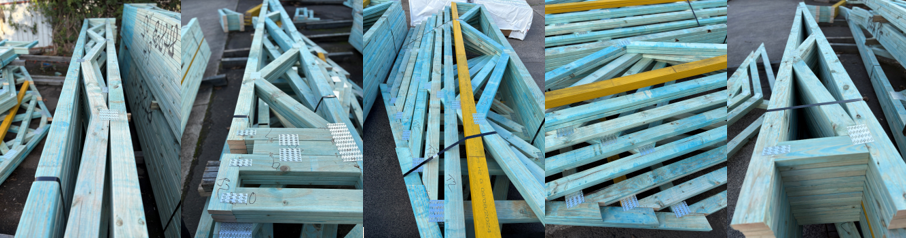
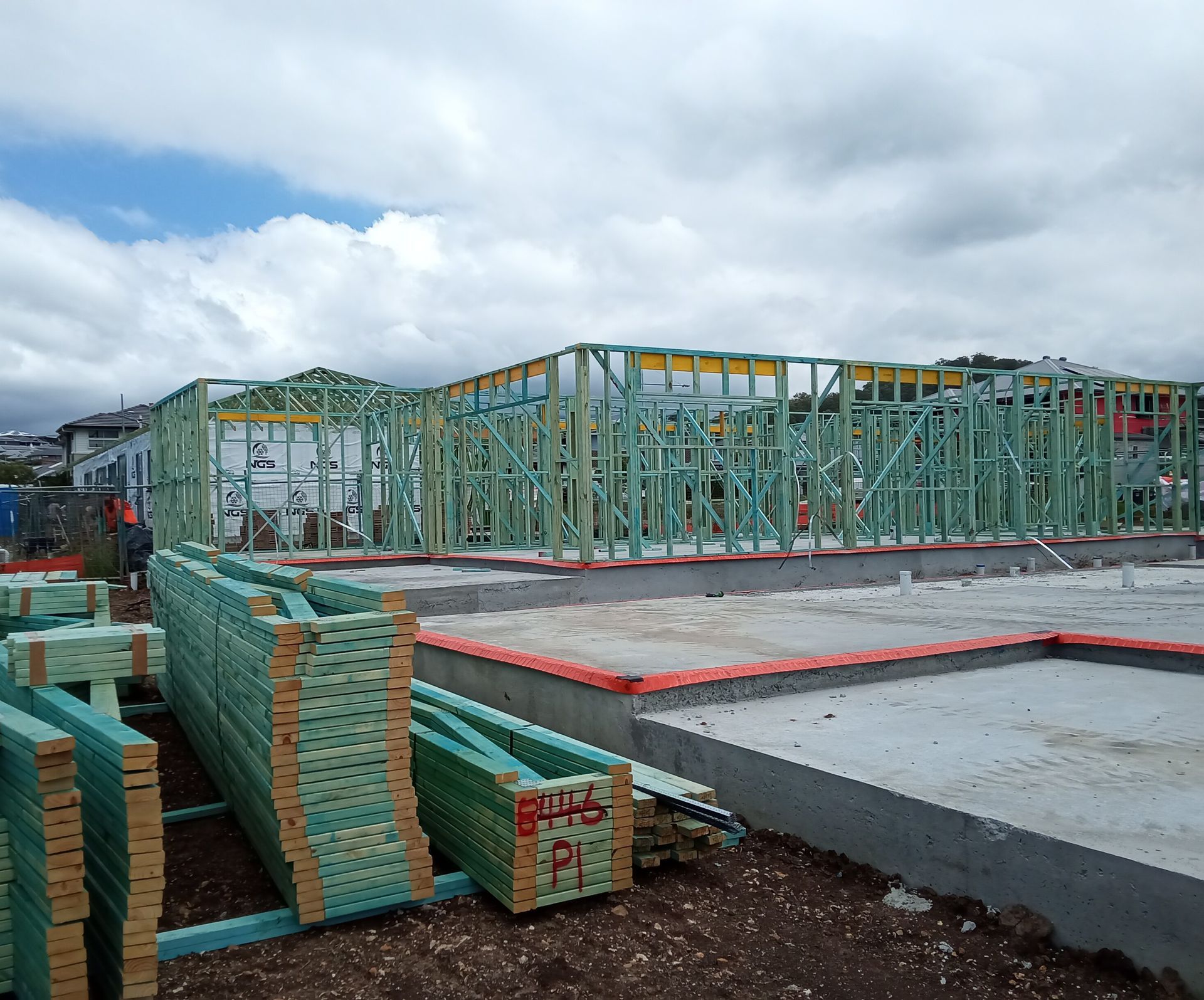
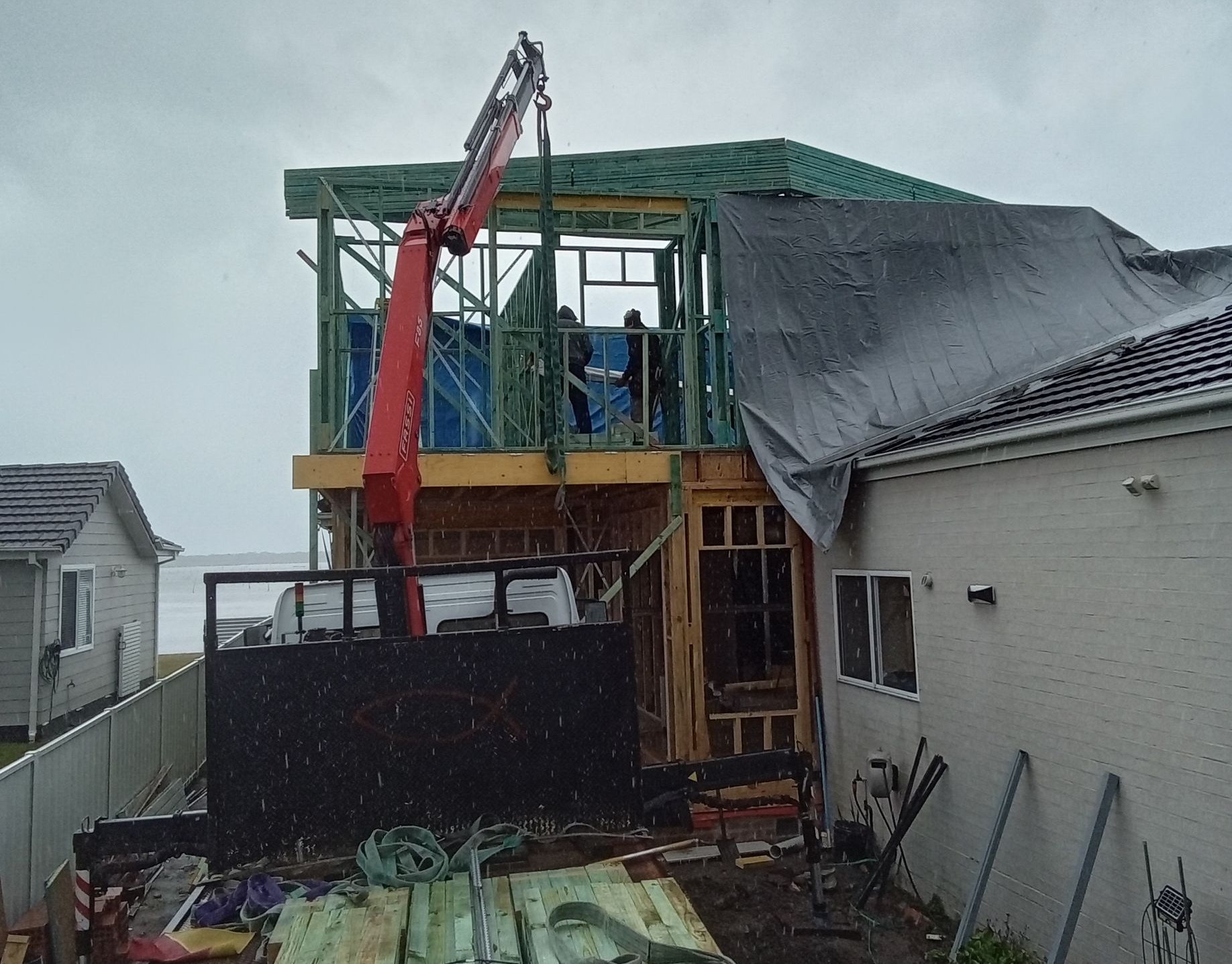
At Wonson Frames & Trusses, our timber wall frames, roof trusses, and flooring systems are designed and manufactured to support accurate, efficient, and reliable construction outcomes for builders across NSW.
Timber Construction and the Future of Sustainable Building
As more builders and homeowners look for eco-friendly homes, sustainable building materials, and low-carbon construction methods, timber will continue to play an important role.
Timber frames and trusses help combine structural strength with environmental responsibility. They store carbon, support energy-efficient design, and come from a renewable resource when responsibly sourced.
For projects across Sydney, the Illawarra, the South Coast, and the Southern Highlands, choosing timber framing is a practical step toward smarter, lower-impact construction.
Build Smarter with Timber Frames and Trusses
If you are planning a residential build, multi-dwelling development, or custom construction project, timber frames and trusses offer a proven, sustainable, and efficient structural solution.
Wonson Frames & Trusses supplies precision-manufactured timber wall frames, engineered roof trusses, and structural flooring systems for builders across NSW.
For accurate estimating, detailing, manufacturing and delivery, speak with our team about your next timber construction project.
To find out more about Timber VS Steel click here